This Gardening Life

Monday, October 16, 2006

Roses in October

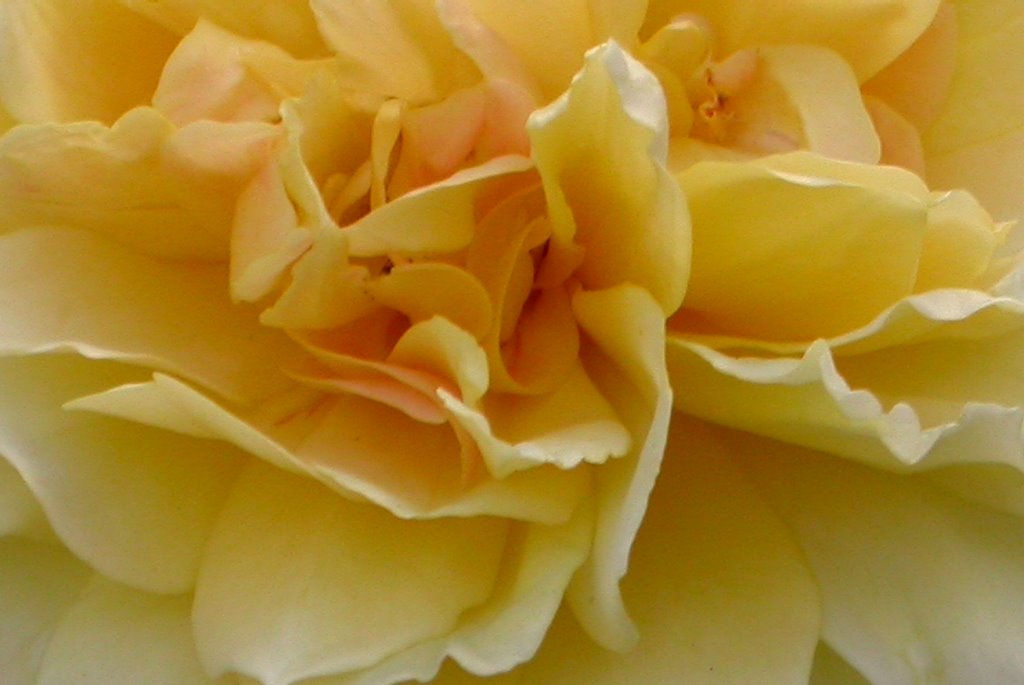
I can remember many past October days of near 100 degree heat with hot dry wind, sitting (standing, yelling) for my son's soccer team. Not this year. At least so far. Maybe last January's heat wave balances out our very cool, overcast autumn. The roses are once again happy. This David Austin rose Molineux Yellow is planted in a fairly smallish pot (for a rose) in the front of Casa Grande. And boy, does it hate the heat. During this summer's massive three week record breaking heat wave I pruned it back to nothing to give it and the other potted roses a rest. It's once again five feet tall and popping out these eye popping blooms. Bring on the rain! (I reserve the right to take back that last statement if we have another January like '05.)

Labels: ,

Wednesday, April 12, 2006

The Madame

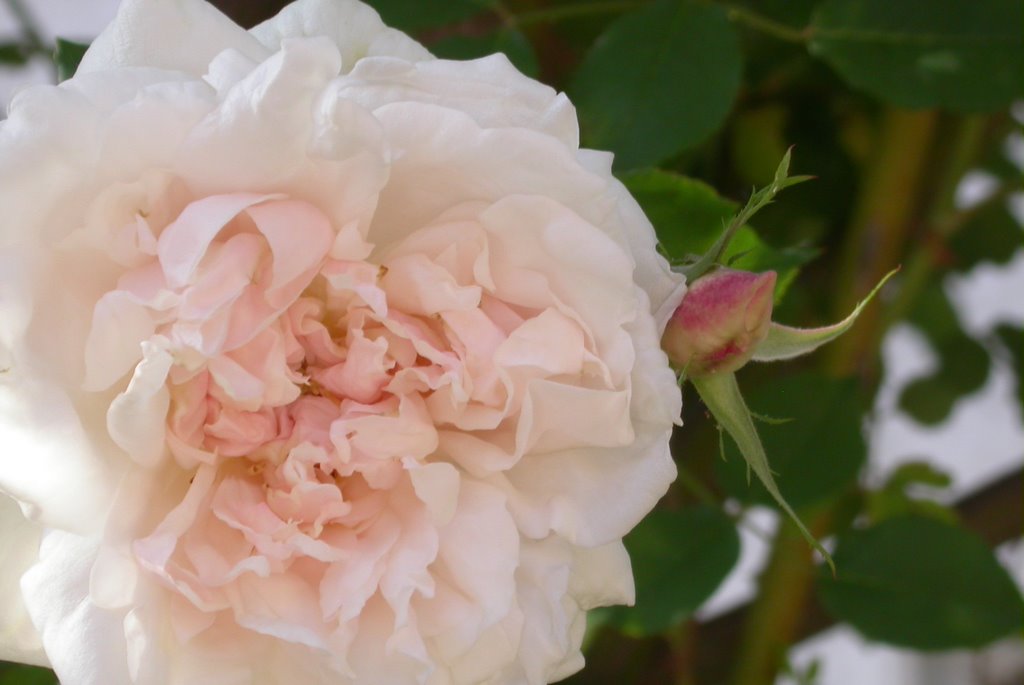
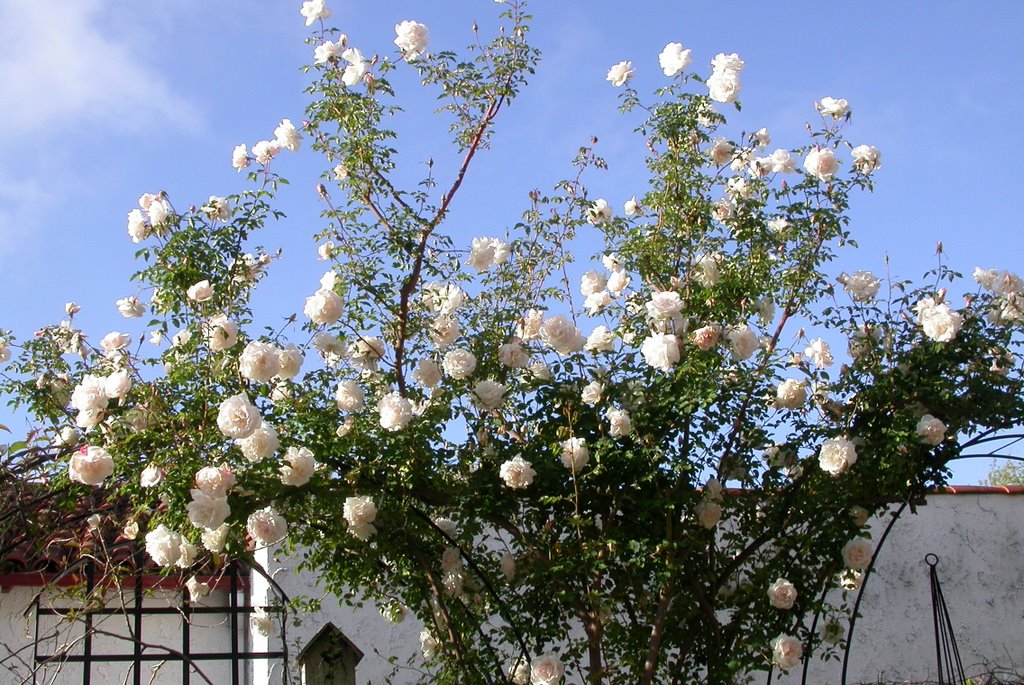
Madame Alfred Carrier is a noisette rose dated 1897. It was raised by Joseph Schwartz of Lyon, France but its parentage is unknown. The Madame was the wife of a rose lover from the province of Dauphine. This climbing rose was very popular during the Victorian era for it's beautiful fragrance, form and repeating blooms.
Source:
Olympia Rose Society, Centennial Garden Visitors Guide www.olyrose.org

I've seen references to the Madame from all over the country on various web pages. She seems to thrive everywhere roses grow. She's a hardy girl, fast growing, relatively disease free, free blooming, perfumed and ready for guests from early April through January here in Fullerton. Unlike the more common Cecil Bruener whose flower is similarly colored but much smaller, the Madame has few thorns by comparison.

I planted her in her present location about 5 years ago. The location gets shade from ground level to about 4 ' up during the winter months, so the lower canes are exposed without much foliage or flowers. This allows for some great under-plantings of shade plants and a birdbath and sculpture. I've trained her on a couple of Monet Arches from Smith and Hawkin. Pruning in January is pretty much a several hour job involving ladders, leather gloves and some ticked off hummingbirds. I pick off all the leaves and trim back the weak canes, leaving much of the height. I sprayed with dormancy spray this year and gave it a systemic fertilizer about two weeks after pruning. Five weeks ago, I gave it an epsom salt dump. (1/2 cup epsom salt to 1 gallon of water.) The result is stunning. And the hummingbirds are once again happy.

Labels: ,

Friday, January 13, 2006

The Spareness of January

January is a time for thinking lean. The newspaper ads are full of workout outfits and equipment. The local gyms have membership deals. My idea of a January diet is the visual relief I get from shedding the exuberance of Christmas and pruning the roses.

There are many philosophies floating around about rose pruning in southern California. The latest involves pruning heavily in the heat of summer when the roses tend to wilt and fade and require vast amounts of water, then pruning with a light hand during January. I tried this last year with mediocre results. It rained hard and continuously for nearly the entire month of January '05, and the over-wintering leaves turned orange with rust, requiring extreme measures just when the first big bloom occurred at the end of March. So this year I pruned lightly in August and did my equivalent of Bush's brush clearing this week in January. The very large Madame Alfred Carrier pictured in my first post below has been picked clean of foliage, sprayed for insects, mulched and pruned down to it's bones to force it into a brief dormancy. The climbing Eden pictured above needed a lot more reining in this year and was pruned a little heavier. Here in SoCA we leave a lot of sticks in the air so the roses don't have to work too hard in the spring.
The weather has been so warm and spring-like, roses pruned just last week have already started to leaf out. We had a hard rain last night, though. Perfect timing! (A big thank you to the forces of nature!) A wake up rose cocktail will be given each bush next week, the rose equivalent of a double espresso.

Here is a recipe for the rose cocktail taken from Robert Smaus' 52 Weeks in the California Garden.

1 cup gypsum
1 tablespoon soil sulfur
1 tablespoon chelated iron
1 tablespoon Epsom salts
1 tablespoon Bone Meal

"Mix, then scatter around the base of the bush and rake in to the soil. Rain and irrigation will do the rest."


Labels: ,

Thursday, November 10, 2005

Abraham Darby, One, Two, Three

According to Wikipedia, Abraham Darby (I,II and III--1698 to 1791) was/were noted for their contributions in ironworking. Builders of bridges and steam engines, they were also significant developers in the uses of energy that propelled the Industrial Revolution.

David Austin has memorialized them (collectively) and their contributions to the advancement of industry and practical science in this beautiful rose which continues to bloom in southern California in November. I have found that this English Rose does not like the full hot sun of a Fullerton summer, even when sufficiently watered. Rather, it thrives in the spring and autumn when the cooler wetter weather mimics, possibly, a British summer.

Hard to imagine why David Austin named this delicate, fragrant cabbage-like rose after these captains of industry. (Clip a few blooms and put them in a vase. Bury your face in them every time you pass their way.) Possibly because it is very hardy and disease resistant. Abraham III's cast iron bridge over the Severn was so important, it caused a city to grow up around it. I guess it was the "Bridge to Nowhere" of the 18th century. Maybe this is what Ted Stevens has in mind with his bridge from Ketchikan, Alaska, to an offshore island inhabited by 50 solitude loving souls. (Cost to taxpayers, mostly not from Alaska--$223 million)

The bridge building Darbys were peace loving Quakers, much like the Inuits who strongly oppose the bridge and all it will bring in the way of change.

Ah Progress!

Labels: ,